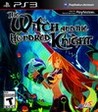
It always happens that some of the very best titles on a platform are released toward the end of the console's life. They're called anchor titles, named so because they make it seem unnecessary- for a time- to pick up a next gen console. The Witch and the Hundred Knight is one of those anchor releases.
I got the game on the 21st (EU release) and played it day-in day-out until I finishedIt always happens that some of the very best titles on a platform are released toward the end of the console's life. They're called anchor titles, named so because they make it seem unnecessary- for a time- to pick up a next gen console. The Witch and the Hundred Knight is one of those anchor releases.
I got the game on the 21st (EU release) and played it day-in day-out until I finished it. I did the grinding for bonus objectives and items and fully explored every map, so this review is based on a complete experience.
Despite its ostensible billing as a darkly twisted comedy, TWHK is actually quite earnestly dark for a JRPG. Metallica, the titular Witch, is a genuinely wicked individual for most of the game (or all of it, depending on your sensibilities), and as the Hundred Knight you'll witness her committing some straight-up deplorable acts. I was delighted that Metallica's evil wasn't the whimsical, inoffensive cartoonish sort, but your mileage may vary so consider yourself forewarned.
The story is quite unconventional, especially by the standards of JRPGs. Metallica's goals- and by extension the goals of the Hundred Knight are very straightforward in the beginning, but just like the various combat and resource systems, the story acquires and incorporates additional layers as you progress. That it manages to do so without falling into Squeenix-patented contrivance and convolution and without messing up the pacing is worthy of some praise.
Speaking of the combat and resource systems, they're introduced at the rate of about one or two per map after the tutorial until they're all in place. If you need to run the tutorial panels again then you can always do so from the main menu, but TWHK's systems interlock so neatly, and are so intuitive, that I very much doubt you'll have to.
The most significant mechanic is Gcals, which is both a resource and combat mechanic. If I have one big criticism of the game, it's that the Gcal mechanic micromanages the player somewhat, and if you don't pick up on this through regular play, the consequences might worsen your experience.
Gcals burn down from 100 to zero as you perform actions with the Hundred Knight. From map start, you have about ten minutes worth of Gcals which can be replenished at checkpoints in return for a temporary currency called GRADE. You earn GRADE by killing regular monsters.
And that is what the micromanagement of you boils down to: TWHK punishes you for bee-lining from way-point to way-point in a race to the map bosses without building GRADE by almost guaranteeing that you'll run into those bosses with too few Gcals left to win. The penalty for death is minor, but it's still an inconvenience, so make sure you nip it in the bud by doing a little fighting all the way.
Luckily, you'll probably want to fight!
In order to do violence to Metallica's enemies, you'll build your own combos from weapons that deal either Slash, Blunt or Magic damage. The aim is for a mix that flows smoothly, suits you personally and mixes all three varieties. If this element has one flaw, it's that you can't save configurations and load them at will. That occasional irritation aside, it's a really great element that I had a lot of fun constantly tinkering with.
The fighting itself is a simple, well trodden concept with solid execution. Dodge, defend and deploy a mixture of attacks and special skills to overcome your enemies. Overhead prompts coincide with enemy wind-ups, but they're neither intrusive nor patronising. Pulling various types of enemies together is incentivised by the soft Gcal time limit and the desire to earn GRADE, and is what ultimately will provide you with the most rewarding battles, as you dodge direct and indirect attacks from all sides while slaying foe after foe.
Finally, on non-visual atmospheric elements like soundtrack and voice-work, I'll admit up-front that I'm not an audiophile, before saying: the music is fun and catchy- some tracks more than others- but for the most part I didn't notice it (although I might have noticed the absence of it, had I turned it off via its separate slider). The English voice-work is incomplete, not covering all the conversations that are voiced in Japanese. For me this was not a problem, as the Japanese voice-work is usually superior and I switched to it immediately after a quick test.
Overall, a mighty anchor title for JRPG fans. If that's what you call yourself, then do yourself a huge favour. Buy this excellent game!
Note: review is *intentionally* bereft of narrative details. Also light on mechanics details, as I only single features out if they are an impediment to the game or like Gcals, require specific addressing. Review is also bereft of commentary on the graphics, as anybody can review TWHK's appearance for themselves on Youtube.… Expand

 The Witch and the Hundred KnightYour Score0 out of 10User Score
