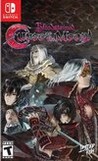
Bloodstained is like the worst movie from your favorite director: it feels thrown together, unpolished, and in general a bit of a mess–but you can discern the familiar hand of a real author behind every sequence, so you cannot lend yourself to hate the result.
Before I tackle the game's shortcoming, let me specify one thing: as I played it, in November 2019, the infamous technicalBloodstained is like the worst movie from your favorite director: it feels thrown together, unpolished, and in general a bit of a mess–but you can discern the familiar hand of a real author behind every sequence, so you cannot lend yourself to hate the result.
Before I tackle the game's shortcoming, let me specify one thing: as I played it, in November 2019, the infamous technical issues of the Switch version have been ameliorated. Loading times are acceptable, the controls are fairly responsive, and the game only crashed three or four times as I played all the way to the "good" ending. Bloodstained is not a technical marvel by any stretch of the imagination, but it's not the disaster that it apparently was on release.
That been said, the problems with the game run deeper than its implementation, right into its much-lauded design. Metroidvanias are often better when they're bigger, and Bloodstained seems eager to please the player with hundreds of items, weapons, and creatures. This plentiful content, however, left me cold. Yes, there are multiple interacting mechanics to find, buy, sell, create, upgrade, grow, donate, combine and dismantle items, including food, power-ups, and weapons. However, those mechanics feel too annoyingly complicated for their own good. Unlocking recipes and concocting potions and food items never feels like joyful discovery–it feels like work, and a lot of pointless browsing through long lists. The same goes for the boring side missions. All in all, the systems in Bloodstained feel like they came out of a desire to have more stuff than previous similar games, not from the need to make the game's design tighter or more fun.
The same goes for the overabundant weapons and "shards" (the game's stand-in for movement upgrades, power-ups, and magic). They're plentiful, but the game never gives you a compelling reason to explore them. On the contrary, some mechanics actively discourage you from doing that. For example, there are not one, but two different ways to upgrade a shard–which means that once you have a powerful shard that you invested time and resources in, it feels like a waste to switch to a less powerful, non-upgraded shard, even just to give it a try. Ironically, I ended up ignoring almost all those items and using mostly the same handful of weapon types and shards throughout the game.
Another example of the game's maximalist approach is in the enemy design. You'll find hundreds of enemies across the many biomes of the game's sprawling map, sporting wildly divergent styles (and sometimes shaky animations)–from giant doggy heads to Universal classic monsters to horned kittens to literal sea horses galloping underwater. By comparison with this weird and cheesy kitchen sink of a bestiary, Dungeons & Dragons' Monster Manual looks like a damn zoology treatise. You've got to wonder whether any creature idea was ever scrapped from the game for feeling inconsistent or too silly.
All of those issues come together into what I believe is the most disappointing and flawed part of the game: the boss fights. The designers clearly spent a huge amount of time building a dozen of challenging bosses with interesting movesets, plus a bunch of optional bosses to boot–but the game's other systems nullify all that work and encourage you to deal with all bosses exactly the same way. Literally all bosses can be cheesed by just facetanking them with powerful magic until they go down. The only bosses that gave me any kind of challenge where the first two, before I had powerful magic at my disposal. All the rest, including the bullet-spongy final boss, were a walk in the park: I just stayed close to them and deployed the exact same, wildly overpowered shard magic until they went down. A few bosses did drain my health faster than I could drain theirs, and in that case I brought a few potions and food to get a refill as I pummeled them. I don't think I ever noticed most bosses' attack patterns.
I'm pretty sure that if you choose to, you can turn every boss fight into an interesting exercise in tactics and pattern recognition–but why do that, when the game gives you plentiful non-cheating means to turn even the baddest boss into a pushover? It pains me to say this, but combat in Bloodstained is, plain and simple, broken.
This review might feel extremely negative, but I actually had decent fun playing through Bloodstained. It's a game made with passion by experienced people with a lot of heart. It's far from perfect, but you've got to respect the people who built it, and wish them a long career and many future games. In the end, however, it also feels like a missing opportunity. As I finished Bloodstained, I regretted the fact that it wasn't a smaller, more focused, more tightly designed game, instead of this "more is better" display of unnecessary authorial grandiosity.… Expand