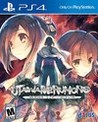
User Score
8.9

Generally favorable reviews- based on 62 Ratings

User score distribution:
  1. Positive: 55 out of 62
  2. Negative: 5 out of 62
Buy Now
Buy on

Review this game

  1. Your Score
    0 out of 10
    Rate this:
    • 10
    • 9
    • 8
    • 7
    • 6
    • 5
    • 4
    • 3
    • 2
    • 1
    • 0
    • 0
  1. Submit
  2. Check Spelling
  1. Oct 5, 2020
    3
    When compared to the first game, this sequel is overly-long, cliche, has more plot holes, and is not nearly as interesting.

    The combat is mostly the same as the last game and there's about twice as many combat missions, though that's due to the game being nearly twice as long. Combat is slightly harder. Where I failed no missions in the last game, I had to retry two missions in this
    When compared to the first game, this sequel is overly-long, cliche, has more plot holes, and is not nearly as interesting.

    The combat is mostly the same as the last game and there's about twice as many combat missions, though that's due to the game being nearly twice as long. Combat is slightly harder. Where I failed no missions in the last game, I had to retry two missions in this game (one being one of the final bosses). Though this isn't really a game you play for the combat, so I'll get onto the story.

    I'll be brief and general here, as talking about the story could spoil the previous game (Mask of Deception), which you should play before considering playing this one.

    Whereas the last game kept me interested in the world due to strange (and believable) things being uncovered, this game takes a much more generic approach. There's very little new and interesting happening and the characters unfortunately become solidified into their stereotypes, which makes them less interesting.

    The first half of the game is all about a war that you're leading. The writers are not very good at war stories, so if you're into those types of stories, you'll be disappointed here. One of the main things they do is to have one side discuss what possible battle options there are, make a decision, and then switch to the enemy, who discusses the exact battle options. This is a writing trick to convince the reader/player that those are the only options that exist, which adds credibility to the plot. But the more critically-minded will see a large number of options that weren't discussed and see that the narrow-mindnesses of the opponents is due to the writers wanting to force the story to move in a certain direction, while providing these explanations as an attempt to improve believability.

    I should also point out that during the war section of the story, there's an individual enemy who vows to kill you, but never actually does. You get into numerous battles where he is about to make the final strike and possibly end your life, but something silly comes up that requires his attention and it turns into a children's "I'll get you next time!" fiasco.

    Oh, and there's the mind-altering bug that's implanted into a different individual to manufacture another opponent for you. Yep, we've got mind control here and it's the only instance of something like this being used with no reasonable world-explanation for its use. That's not bad on its own, but nonsensical stuff like this just keeps coming up over and over in the story.

    After the long (and arguably pointless) war section, you get back to the interesting stuff, such as the origins of this world, its people, and yourself. This section is also drawn out and has very little new to offer when compared to the previous game. New enemies are manufactured for you to fight, and for some reason, you must fight them multiple times. It seems as though the protagonist in this game has a hard time verifying whether someone is dead before declaring victory.

    You'll run into other writing issues here too, such as learning it's much easier than you expected to get this "key" that unlocks the secrets of the world - making some of the major actions in the previous game pointless. And coming across not one, but two, people/entities who want to destroy the world because they're depressed.

    Oh well, at least there was one well-written and touching scene in the middle of the game regarding a particular mother.

    Not exactly the game/story for people who easily notice (and dislike) plot holes, but decent enough if you liked the first game and just want to get more of these characters.
    Expand
Metascore
75

Generally favorable reviews - based on 22 Critic Reviews

Critic score distribution:
  1. Positive: 11 out of 22
  2. Negative: 0 out of 22
  1. Apr 18, 2018
    90
    It’s hard to say whether Utawarerumono: Mask of Truth is better than Mask of Deception since they’re essentially one story split into two halves, but I found the entire tale thought-provoking and its characters lovable and (mostly) funny. It’s a visual novel worth playing, and now that I’ve reached its end, I’m a little sad saying goodbye.
  2. Jan 4, 2018
    65
    If you're a fan of visual novels and enjoy reading a story you can safely get Mask of Truth; the gamers who are actually looking for a challenge and don't care for the plot should probably look somewhere else instead.
  3. Nov 20, 2017
    70
    It is difficult to pull off, but Utawarerumono: Mask of Truth has managed to both make a solid SRPG and visual novel in the same game. The world is interesting, and the characters are enjoyable to play as and to see the world with, even though sometimes it is too reliant on common tropes. The combat system also has depth to it with a lot of systems in place to reward those who think several turns in advance. The problem is that both aspects of the game are somewhat bloated. For fans of both genres this will not be obvious or even an issue at all, but for those who only likes the former or the latter, this might quickly make either feel like it's overstaying its welcome, in a good 80+ hours long game.