TV Show Releases by Genre
Taxi: Season 1September 12, 1978Taxi's television history is filled with contradictions. Produced by some of television comedy's most well-regarded talent, the show was canceled by two different networks. Despite winning fourteen Emmy Awards in only five seasons, the program's ratings were rock-bottom for its final seasons. Although it thrives in syndication and is still well-loved by many viewers, Taxi will be best remembered as the ancestral bridge between two of the most successful sit-coms of all time: The Mary Tyler Moore Show and Cheers. In the mid-1970s, MTM Productions had achieved huge success with both popularity and critical appraisal. So it was an unexpected move when four of the company's finest writers and producers, James L. Brooks, Stan Daniels, David Davis, and Ed. Weinberger, jumped off the stable ship of MTM in 1978 to form their own production company, John Charles Walters Company. To launch their new venture, they looked back to an idea that Brooks and Davis had previously considered with MTM: the daily life of a New York City taxi company. From MTM head Grant Tinker they purchased the rights to the newspaper article that had initiated the concept and began producing this new show at Paramount for ABC. They brought a few other MTM veterans along for the ride, including director James Burrows and writer/producers Glen and Les Charles. Although Taxi certainly bore many of the trademark signs of "quality television" as exemplified by MTM, other changes in style and focus distinguished this from an MTM product. After working on the middle-class female-centered worlds of The Mary Tyler Moore Show, Rhoda, and Phyllis for years, the group at John Charles Walters wanted to create a program focusing on blue-collar male experience. MTM programs all had clearly defined settings, but Taxi's creators wanted a show that was firmly rooted in a city's identity--Taxi's situations and mood were distinctly New York. Despite MTM Productions innovations in creating ensemble character comedy, there was always one central star around which the ensemble revolved. In Taxi Judd Hirsch's Alex Reiger was a main character, but his importance seemed secondary to the centrality of the ensemble and the Sunshine Cab Company itself. While The Mary Tyler Moore Show proudly proclaimed that "you're going to make it on your own," the destitute drivers of Taxi were doomed to perpetual failure; the closest any of them came to happiness was Reiger's content acceptance of his lot in life--to be a cabby. Taxi debuted on 12 September 1978, amidst a strong ABC Tuesday night line-up. It followed Three's Company, a wildly-successful example of the type of show MTM "quality" sit-coms reacted against. Taxi used this strong position to end the season ninth in the ratings and garner its first of three straight Emmys for Outstanding Comedy Series. The show's success was due to its excellent writing, Burrows's award-winning directing using his innovative four-camera technique, and its largely unknown but talented cast. Danny DeVito's Louie DePalma soon became one of the most despised men on television--possibly the most unredeemable and worthless louse of a character ever to reside on the small screen. Andy Kaufman's foreign mechanic Latka Gravas provided over-the-top comedy within an ensemble emphasizing subtle character humor. But Kaufman sometimes also brought a demonic edge to the character, an echo of his infamous appearances on Saturday Night Live as a macho wrestler of women and Mighty Mouse lip-syncher. In the second season Christopher Lloyd's Reverend Jim Ignatowski was added to the group as television's first drugged-out '60s burn-out character. But Lloyd's Emmy-winning performance created in Jim more than just a storehouse of fried brain cells; he established a deep, complex humanity that moved far beyond mere caricature. The program launched successful movie careers for DeVito and Lloyd, as well as the fairly-notable television careers of Tony Danza and Marilu Henner; Kaufman's controversial career would certainly have continued had he not died of cancer in 1984. In its third season ABC moved Taxi from beneath Three's Company's protective wing to a more competitive Wednesday night slot; the ratings plummeted and Taxi finished the next two years in 53rd place. ABC canceled the show in early 1982 as part of a larger network push away from "quality" and toward the Aaron Spelling-produced popular fare of Dynasty and The Love Boat. HBO bid for the show, looking for it to become the first ongoing sitcom for the pay channel, but lost out to NBC, which scheduled the series for the 1982-83 season. Ironically, this reunited the show's executive producers with their former boss Tinker, who had taken over NBC. Tinker's reign at NBC was focused, not surprisingly, on "quality" programming which he hoped would attract viewers to the perennially last-place network. Taxi was partnered with a very compatible show on Thursday night--Cheers, created by Taxi veterans Charles, Burrows, and Charles. Although this line-up featured some of the great programs in television history--the comedies were sandwiched by dramas Fame and Hill St. Blues--the ratings were dreadful and Taxi finished the season in 73rd place. NBC was willing to stick by Cheers for another chance, but felt Taxi had run its course and canceled it at the end of the season. Had Taxi been given another year or two, it would have been part of one of the most successful nights on television, featuring The Cosby Show (co-created by Taxi creator Weinberger), Family Ties, Hill St. Blues, L.A. Law, and eventual powerhouse Cheers. Taxi lives on in syndication, but its most significant place in television history is as the middle generation between The Mary Tyler Moore Show and Cheers. It served as a transition between the star-driven middle-class character comedy of MTM programs and the location-centered ensemble comedy inhabited by the losers of Cheers and Taxi. Considered one of the great sit-coms of its era, Taxi stands as a prime example of the constant tension in television programming between standards of "quality" and reliance on high ratings to determine success. --Jason Mittel The Museum of Broadcast Communications 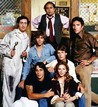
|
||
The Love Boat: Season 1September 24, 1977This lighthearted anthology series came from the mind of successful producer Aaron Spelling. A new set of passengers would work through their problems with love every week aboard the Pacific Princess, which would make its way south from California to Mexico and back. After the 7th season, Lauren Tewes was dismissed from her role as Julie McCoy because of substance abuse problems. Julie's responsibilities were shifted to new characters Judy McCoy (Julie's sister) and Ace Evans. Also brought onboard were a group of dancers for the ship's club, the Love Boat Mermaids, which included a young Teri Hatcher (Lois & Clark, Desperate Housewives). In 1978 and from 1980 to 1984, The Love Boat ran on Saturday nights along with Fantasy Island, a similar Aaron Spelling anthology. Originally shown at 10 in its first season, it moved to the 9 p.m. time slot for the majority of its run before returning to 10 p.m. for its final season after the cancellation of Fantasy Island. Nielsen Ranking: #14 in the 1977-1978 Season #17 in the 1978-1979 Season #24 in the 1979-1980 Season #5 in the 1980-1981 Season #14 in the 1981-1982 Season #9 in the 1982-1983 Season #17 in the 1983-1984 Season #56 in the 1985-1986 Season The memorable theme song was ranked the #32 greatest TV theme by TV Land in 2002. 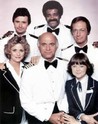
|
||
M*A*S*H: Season 1September 17, 1972M*A*S*H was a true ensemble series. Whilst characters such as Kellye, Igor, Rizzo, Goldman and Ginger are listed where they appear as specific characters central to the plot, they also appeared regularly as non-speaking cast members. This is also true of many of the nurses, corpsmen, orderlies and drivers listed as guest stars. Based on the 1968 novel by Richard Hooker and the 1970 20th Century-Fox movie of the same name, M*A*S*H aired on CBS from September 17, 1972 to February 21st, 1983 for 251 episodes, and has become one of the most celebrated television series in the history of the medium. During its initial season, however, M*A*S*H was in danger of being canceled due to low ratings. The show reached the top ten program list the following year, and never fell out of the top twenty rated programs during the remainder of its run. The final episode of M*A*S*H was a two and one half hour special that attracted the largest audience to ever view a single television program episode. In many ways the series set the standard for some of the best programming to appear later. The show used multiple plot lines in a half-hour episodes, usually with at least one story in the comedic vein and another dramatic. Some later versions of this form, e.g. Hooperman (ABC 1987-1989) and The Days and Nights of Molly Dodd (NBC 1987-1989), would be known as the dramady, half-hour programs incorporating elements of both comedy and drama. Other comedies would forgo the more serious aspects of M*A*S*H, but maintain its focus on character and motive. And some dramatic programming, such as St. Elsewhere and Moonlighting would draw on the mixture of elements to distinguish themselves from more conventional television. M*A*S*H was set in South Korea, near Seoul, during the Korean War. The series focused on the group of doctors and nurses whose job was to heal the wounded who arrived at this "Mobile Army Surgical Hospital" by helicopter, ambulance or bus. The hospital compound was isolated from the rest of the world. One road ran through the camp; a mountain blocked one perimeter and a minefield the other. Here the wounded were patched up and sent home--or back to the front. Here, too, the loyal audience came to know and respond to an exceptional ensemble cast of characters. The original cast assumed roles created in Altman's movie. The protagonists were Dr. Benjamin Franklin "Hawkeye" Pierce(Alan Alda) and Dr. "Trapper" John McIntyre (Wayne Rogers). Pierce and McIntyre were excellent surgeons who preferred to chase female nurses and drink homemade gin to operating and who had little, if any use for military discipline or authority. As a result, they often ran afoul of two other medical officers, staunch military types, Dr. Frank Burns (Larry Linville) and Senior Nurse, Major Margaret "Hot Lips" Houlihan (Loretta Swit). The camp commander, Lt. Col. Henry Blake (McLean Stevenson), was a genial bumbler whose energies were often directed toward preventing Burns and Houlihan from court martialing Pierce and McIntyre. The camp was actually run by Corporal Walter "Radar" O'Reilly (Gary Burghoff), the company clerk who could spontaneously finish Blake's unspoken sentences and hear incoming helicopters before they were audible to other human ears. Other regulars were Corporal Max Klinger (Jamie Farr) who, in the early seasons, usually dressed in women's clothing in an ongoing attempt to secure a medical (mental) discharge, and Father Francis Mulcahy (William Christopher), the kindly camp priest who looked out for an orphanage. In the course of its eleven years the series experienced many cast changes. McIntyre was "discharged" after the 1974-75 season because of a contract dispute between the producers and Rogers. He was replaced by Dr. B.J. Hunnicutt (Mike Farrell), a clean cut family man quite different from Pierce's lecherous doctor. Frank Burns was given a psychiatric discharge in the beginning of the 1977-78 season and was replaced by Dr. Charles Emerson Winchester (David Ogden Stiers), a Boston blueblood who disdained the condition of the camp and tent mates Pierce and Hunnicutt. O'Reilly's departure at the beginning of the 1979-80 season was explained by the death of his fictional uncle, and Klinger took over the company clerk position. Perhaps the most significant change for the group occurred with the leave-taking of Henry Blake. His exit was written into the series in tragic fashion. As his plane was flying home over the Sea of Japan it was shot down and the character killed. Despite the "realism" of this narrative development, public sentiment toward the event was so negative that the producers promised never to have another character depart the same way. Colonel Sherman Potter (Harry Morgan), a doctor with a regular Army experience in the cavalry, replaced Blake as camp commander and became more both more complex and more involved with the other characters than Blake had been. Though the series was set in Korea, M*A*S*H, both the movie and the series, was initially developed as a critique of the Vietnam War. As that war dragged toward conclusion, however, the series focused more on characters than situations--a major development for situation comedy. Characters were given room to learn from their mistakes, to adapt and change. Houlihan became less the rigid military nurse and more a friend to both her subordinates and the doctors. Pierce changed from a gin-guzzling skirt chaser to a more "enlightened" male who cares about women and their issues, a reflection of Alda himself. O'Reilly outgrew his youthful innocence, and Klinger gave up his skirts and wedding dresses to assume more authority. This focus on character rather than character type set M*A*S*H apart from other comedies of the day and the style of the show departed from the norm in many other ways as well, both in terms of its style and its mode of production. While most other contemporary sitcoms took place indoors and were largely produced on videotape in front of a live audience, M*A*S*H was shot on film on location in Southern California, as well as in a closed studio set (studio #9 at 20th Century Fox). Outdoor shooting at times presented problems. While shooting the final episode, for example, forest fires destroyed the set, causing a delay in filming. The series also made innovative uses of the laugh track. In early seasons, the laugh track was employed during the entire episode. As the series developed, the laugh track was removed from scenes that occurred in the operating room. In a few episodes, the laugh track was removed entirely, another departure from sitcom conventions. The most striking technical aspect of the series is found in its aggressively cinematic visual style. Instead of relying on straight cuts and short takes episodes often used long shots with people and vehicles moving between the characters and the camera. Tracking shots moved with action, and changed direction when the story was "handed off" from one group of characters to another. These and other camera movements, wedded to complex editing techniques, enabled the series to explore character psychology in powerful ways, and to assert the preeminence of the ensemble over any single individual. In this way M*A*S*H seemed to be asserting the central fact of war, that individual human beings are caught in the tangled mesh of other lives and there must struggle to retain some sense of humanity and compassion. This approach was grounded in Altman's film style and enabled M*A*S*H to manipulate its multiple story lines and its mixture of comedy and drama with techniques that matched the complex, absurd tragedy of war itself. M*A*S*H was one of the most innovative sitcoms of the 1970s and 1980s. Its stylistic flair and narrative mix drew critical acclaim, while the solid writing and vitally drawn characters helped the series maintain high ratings. The show also made stars of it performers, none more so than Alda, who went on to a successful career in film. The popularity of M*A*S*H was quite evident in the 1978-79 season. CBS aired new episodes during primetime on Monday and programmed reruns of the series in the daytime and on Thursday late night, giving the show a remarkable seven appearances on a single network in a five day period. The series produced one unsuccessful spin-off, AfterMASH, which aired on CBS from 1983-85. The true popularity of M*A*S*H can still be seen, for the series is one of the most widely syndicated series throughout the world. Despite the historical setting, the characters and issues in this series remain fresh, funny and compelling in ways that continue to stand as excellent television. Some of the above info from the article in the Museum Of Broadcast Communications: M*A*S*H page, written by Jeff Shires. M*A*S*H Theme Song - "Suicide Is Painless" Written by Digital Tradition Mirror (Lyrics shortened for television theme) Through early morning fog I see, Visions of the things to be, The pains that are withheld for me, I realize and I can see... That suicide is painless, It brings on many changes, And I can take or leave it if I please. Ratings (Top 30 or Better) – 1972-1973:Not in Top 30 1973-1974:#4 1974-1975:#5 1975-1976:#15 1976-1977:#4 1977-1978:#9 1978-1979:#7 1979-1980:#5 1980-1981:#4 1981-1982:#9 1982-1983:#3 Telecast: CBS September 17, 1972 - September 19, 1983 Broadcast History (all times Eastern): Sep 1972 - Sep 1973, CBS Sun 8:00-8:30 Sep 1973 - Sep 1974, CBS Sat 8:30-9:00 Sep 1974 - Sep 1975, CBS Tue 8:30-9:00 Sep 1975 - Nov 1975, CBS Fri 8:30-9:00 Dec 1975 - Dec 1977, CBS Tue 9:00-9:30 Jan 1978 - Sep 1983, CBS Mon 9:00-9:30 251 Episodes In Color On Film Repeats air on Hallmark Channel. 
|
||
Camp RockJune 20, 2008 |
||
Signed, Dealed, Delivered: Season 1April 13, 2014 |


The Maya Rudolph Show: Season 1May 19, 2014 |

-

King of the Hill: Season 15
- Start date: Jul 20, 2026

Stuart Fails to Save the Universe: Season 1
- Start date: Jul 23, 2026
President Curtis: Season 1
- Start date: Jul 26, 2026
Essential LinksMost Talked About Trailers


