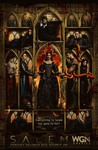
Manages to be compelling despite despite several obvious flaws. Acting is only mediocre; history is spotty at best (hypodermic needles in 17th century Massachusetts? No); and the diction used tends to switch between awkward attempts at Elizabethan English and modern usages.
Probably the biggest issue with "Salem," though, is the metaphor.
In reality, the Salem Witch Trials were aManages to be compelling despite despite several obvious flaws. Acting is only mediocre; history is spotty at best (hypodermic needles in 17th century Massachusetts? No); and the diction used tends to switch between awkward attempts at Elizabethan English and modern usages.
Probably the biggest issue with "Salem," though, is the metaphor.
In reality, the Salem Witch Trials were a means utilized by men to rob women of property; they were also a superstitious overreaction to fear of the unknown (and the strange and different). The so-called "witch hunters" were brutal, awful people who murdered others - primarily women - for enjoyment and personal gain.
In the show "Salem," we see that evil witches "really did" live in 17th Century Salem; and while the show does show us the witch-hunting priest Cotton Mather "trying" and killing innocents - part of the evil witches' plan - he is overall cast as a sympathetic character, a young man in over his head who is ultimately correct about the evil in the town he wishes to save.
"Salem" seems to be trying hard for a level of moral ambiguity it just can't seem to achieve, and therein lies its problem; despite the audience having sympathies on both sides, as Mather and Alden become more rational and get closer to the truth, the witches themselves continue to plot to murder innocent people in pursuit of their "Grand Rite," which makes the witch-hunters out as the good guys and the witches as the bad guys (again, even though several of the witches are definitely cast as sympathetic characters).
The metaphorical issues with retelling the story of Salem with the justification that evil witches really did exist, and then also portraying the witch-hunters of the time in a positive light, are numerous and unfortunate. For comparative purposes, consider the implications of a television show in which Jews really were plotting world domination in the 1930s and a misguided but sympathetic concentration camp commandant attempted to stamp out the plot. Not an exact replica of the crimes against history "Salem" is committing, but still pretty close.
If you can get by the relatively awful metaphorical implications of the show, and also manage to overlook issues in the acting and writing, you may have an enjoyable experience. I've only seen Janet Montgomery once before this but she remains compelling. Shane West's constantly simmering anger and taciturn personality aren't what awards are made of, but he is enjoyably watchable. Seth Gabel, whose portrayal of Cotton Mather is lampooned above, is probably the most watchable actor on the show; he brings more depth and conflict to Mather's personality than perhaps it deserves. Then again, Tamzin Merchant and Xander Berkeley are nearly unwatchable, especially together; Merchant's character has almost no depth whatsoever, whereas Berkeley's character is reduced to insignificant scheming, walking around looking for stuff ineffectually, bowing down to Janet Montgomery's character when he clearly doesn't want to, and bossing around his family. His tone during all of these actions is one of fear and resignation and none of it seems to be building toward anything.
"Salem" isn't a good show. It's watchable and dramatic, and you might find yourself drawn into the love stories of Mary and John; you might be surprised by the offbeat romance between Mather and Gloriana, a prostitute (although, warning, he sexually assaults her and never so much as apologizes and once she's done slapping him for it she just seems to love him more - we certainly needed more of that in modern storytelling, right?). Unfortunately, the show's numerous and egregious problems - from concept to execution - prevent it from becoming anything of of real interest.… Expand