Every Resident Evil Game, Ranked Worst to Best
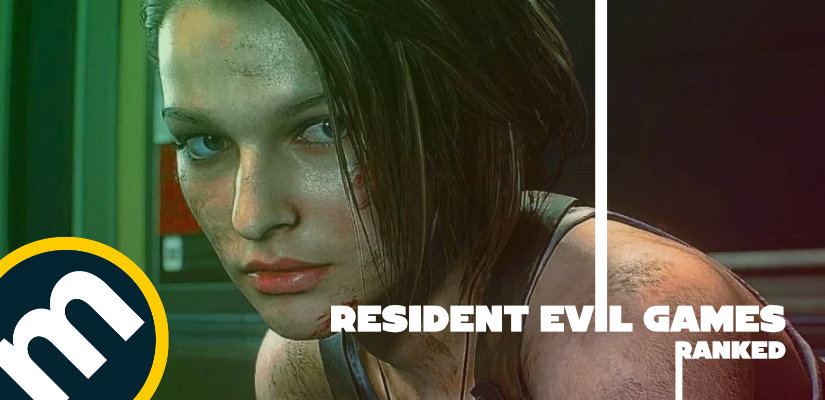
Now going on 25 years with no end in sight, Capcom's Resident Evil is the highest-grossing horror game franchise in history (as well as the Japanese gaming giant's best-selling property in any genre), with well over 100 million units sold even before this month's launch of the newest game, Resident Evil Village. The franchise has spawned over two dozen game titles—10 in the main series plus many more spinoffs and remakes—as well as a (fairly terrible) companion film series and two upcoming Netflix shows (one live-action, one animated).
In the gallery on this page, we rank every* Resident Evil game to date by Metascore, from worst- to best-reviewed. Many RE games were issued on multiple platforms and in multiple versions. Rather than clutter our list with countless versions of the same game, we limited our selection as follows:
• In general, the first release of each title is included.
• If a title was released simultaneously on multiple platforms, we only included the version that received the highest quantity of reviews from professional critics.
• If a title was later ported to other platforms, those ports are not included ...
• ... but if a title was substantially remade for another later-generation platform, the remake is treated as a separate game and included in our rankings.
An example: We included the original 1999 release of Resident Evil 3 for PlayStation but not the subsequent PC, Dreamcast, or GameCube ports. The 2020 remake is also included as a separate product, but only for PS4 (the version that was reviewed the most by critics).
* A few mobile games are excluded. And one title, the 2002 Game Boy Color exclusive Resident Evil Gaiden, is also omitted—Metacritic did not cover Game Boy Color releases at the time and thus we do not have a Metascore. (Based on its GameRankings score of 56.46%, however, you could expect it to place somewhere toward the "worst" end of our worst-to-best rankings.)
All photos courtesy of Capcom unless otherwise indicated.

PlayStation, 1996
also on PC (1997), Saturn (1997)
Resident Evil isn't the first "survival horror" game—antecedents include Alone in the Dark and Sweet Home, and even the Atari 2600 had at least one game that theoretically falls under the label—but it was in the marketing campaign for Capcom's 1996 release that the phrase was first used to describe a videogame, launching a genre that has become a staple of the gaming world in the decades since. This first Resident Evil game (called Biohazard upon its original Japanese release but forced to change its name elsewhere due to a pre-existing game by that title) actually was conceived as a remake of Sweet Home, Capcom's 1989 haunted house game for the NES from the same director, Tokuro Fujiwara. But it turned into something new as it established franchise staples like the midwestern setting of Raccoon City, the virus-developing antagonist Umbrella Corporation, the playable heroes Chris Redfield and Jill Valentine, a blend of puzzle-solving, exploration, and action, genuine scares, and (of course) zombies.
Buoyed by strong reviews despite a quirky tank-style control scheme and some dubious dialogue, 1996's Resident Evil quickly became the best-selling game of all time on the original PlayStation console, though it was later surpassed by other games, including its own sequel.
“This is exactly the kind of revolutionary title that we applaud. Sure, others like it will come along, some will even surpass it, but hats off to Resident Evil for getting there first.” —Game Revolution
| Buy on |

|