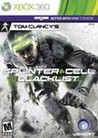
I'm giving this game a 6/10 so as not to be too harsh despite being massively disappointed as a fan of the Splinter Cell series and as a fan of gaming in general.
I'll start on a positive note. The Splinter Cell series has a lot of good history behind it, providing challenging gameplay, exciting gameplay mechanics, smooth visuals and animation, interesting stories and characters thatI'm giving this game a 6/10 so as not to be too harsh despite being massively disappointed as a fan of the Splinter Cell series and as a fan of gaming in general.
I'll start on a positive note. The Splinter Cell series has a lot of good history behind it, providing challenging gameplay, exciting gameplay mechanics, smooth visuals and animation, interesting stories and characters that have managed to become recognisable through clever and witty script writing coupled with a voice actor who managed to deliver the script perfectly. The games managed to deliver a tough yet rewarding experience through stealth based gameplay and always managed to excite by giving you a variety of movements to work with in a challenging environment.
Splinter Cell: Blacklist looked set to build on this with very interesting ideas that appealed greatly by allowing the player to take a more action oriented role if they so wished by providing solid gunplay, customisation options for Fisher and his weapons, a "hub" to break up the linearity of the missions by choosing what we want to do next and slick presentation all while retaining the solid foundation of the series.
Sadly though, this is 2013. Instead, we're given a dumbed down, cover based shooter with diluted Splinter Cell elements shoehorned in to cater for a market that favours games with the complexity of that of a Kinder Egg. Without the Splinter Cell name and signature goggles, it would unrecognisable as part of the series we've grown to love.
Within seconds of playing, it's major flaw is made apparent. The movement of the main character "Fisher" is awful. Gone is the analogue sensitive movement speed which allowed you to decide how fast or slow to move around the environment and instead we're given two speeds: "quick" or "quicker" depending on how far you move the analogue stick. This makes for painful moments as you overshoot corners you wanted to stop at, sneak up behind an enemy as you accidently go "quicker" causing him to hear you and just general movement around the levels. This, coupled with the horrendous animation, makes for Blacklist's biggest downfall.
It’s baffling why they released Blacklist with character animation that looks like it was created by a bad hobbyist. Fisher dives between context sensitive cover with stuttered animation, he hangs from ledges and shuffles along like some sort of primate on crack cocaine, he hangs from horizontal pipes and pulls/pushes himself along at tremendous speed while his legs don't move an inch and actually glitch into the pipe itself, all a complete contradiction to the smooth animations the series used to provide.
As mentioned above, context sensitive controls rears it's ugly head once again as it's featured heavily in Blacklist. Creativity and ingenuity of escaping/hiding from enemies by split jumping between two walls, hanging onto random pipes or ledges and dropping down to safety are instead replaced with a one button fits all approach. You walk up to a glaringly obvious pipe, the green button flashes on your screen and the 360 does the rest, you can't even drop down until you reach the other end or an enemy passes below you causing the blue button to flash on your screen (exciting, I know). All this button flashing business means you don't have to worry about deciding when to move, when to strike, when to jump etc. All of that requires you to do a thing called "judge" which is taxing and such effort needs to be reserved for more challenging tasks like Facebook or Twitter.
At the risk of beating a dead horse, I'm going to describe in detail a scenario which crops up time and time again to reinforce just how tragic an experience the above three flaws in conjuncture with one another can create. Fisher is standing infront of a door, which is next to a light switch and above them is a ledge which is within reach. You try and edge Fisher forward so you can see the big A button appear on screen to open the door but you can't move that precisely, so he runs forward too far, you press A and he turns off the light switch, you run around a little to realign yourself with the aforementioned door which again ends in failure, press A and you climb onto the ledge. You press B twice to get back down the ledge, realign yourself correctly with the door, press A and hurrah, it opens. Now, that's a lot of effort to open a door, especially when three guards are standing 50 yards away from you with assault rifles.
To wrap it all up, I'm going to say Splinter Cell: Blacklist showed potential to build on an already established and solid series with interesting ideas and concepts that really would have moved things forward but instead decided to create a game that plays like it was created by a rival studio who borrowed elements from Splinter Cell and Rainbows 6, mashed them together and blew the rest of the budget on finishing their 3D animation course; A true testament to the games industry and market of today.… Expand