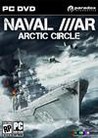
Naval War: Arctic Circle (NWAC) is a fairly unique niche-market game, it's predecessors countable on the fingers of one hand, but nonetheless one that should appeal to any fan of RTS, Naval or even Airforce strategic warfare gaming.
The game is superbly equipped with detailedly stat'd ships, aircraft, submarines, missiles, guns and sensors (both land- and sea-based) from a whole bunch ofNaval War: Arctic Circle (NWAC) is a fairly unique niche-market game, it's predecessors countable on the fingers of one hand, but nonetheless one that should appeal to any fan of RTS, Naval or even Airforce strategic warfare gaming.
The game is superbly equipped with detailedly stat'd ships, aircraft, submarines, missiles, guns and sensors (both land- and sea-based) from a whole bunch of navies and airforces in the North Atlantic region: the UK, US, Norway, Sweden, Finland, Denmark, Germany, Poland and of course Russia.
The idea of a NATO v Russia might sound worn out, but it works out very well in the given storyline context, based on a feasible resource-based conflict originating off the coast of Norway and expanding to the wider Arctic Circle.
Launching all 40 of your F-35Cs from USS Nimitz might sound like an inspired air superiority tactic now but in a few hours when they've all returned home to refuel and rearm, you'll find that NWAC is much more a game of long-term strategy, patience and cunning, pitting you against a quite competent AI that will punish you for silly, or over-optimistic, mistakes. The tutorial does do a decent job of preparing you for your struggle against your opponent, however, and the manual offers a whole section on 'game concepts': that is, how not to finish your escapades in a life raft through the use of real-world naval strategy.
Turbo Tape Games (TTG), the developers of NWAC, are a small and relatively inexperienced mainstream game development team, and they've held up surprisingly well in creating an intuitive user interface and fun overall game, with an ethos of 'playability over simulation'. But NWAC does have it's drawbacks, understandably. Harpoon admirals will miss the NTDS symbols of their previous tools of war. Additionally, the purely aesthetic 3D world view that compliments the main 2D strategic map is less than breath-taking, using relatively low-end graphics (you will find yourself using the map 95% of the time, it should be added). For limited time, the campaigns (there is one for each side of the conflict) are linear sets of scenarios, and there is additionally no random scenario generation feature.
For all these drawbacks, however, TTG have thankfully made NWAC widely moddable, using editable XML files for unit statistics etc, and also apparently allowing users to mod the mechanics of the game with the help of some technical coding knowledge.
On the whole, then, a solid first incursion into the desktop gaming market from a very friendly and communicative development team, and something that should excite military boffins and RTS gamers alike. With a not overly steep learning curve, a good majority of computer-owners should find this an enjoyable and immersive experience.… Expand