A dark and well-made show about the effects of psychological trauma, but the bifurcated narrative is a significant mistake
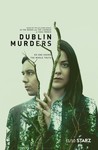
Airing on BBC One in the UK and Ireland and Starz in North America, Dublin Murders is an eight-part series that adapts the first two novels in Tana French's Dublin Murder Squad series – In the Woods (2007) and The Likeness (2008). And herein lies the show's biggestA dark and well-made show about the effects of psychological trauma, but the bifurcated narrative is a significant mistake
Airing on BBC One in the UK and Ireland and Starz in North America, Dublin Murders is an eight-part series that adapts the first two novels in Tana French's Dublin Murder Squad series – In the Woods (2007) and The Likeness (2008). And herein lies the show's biggest problem. French's series is pseudo-anthological in design; each novel has a different protagonist, and although there are common characters across all of the stories, each plot is wholly self-contained. In writing Dublin Murders, Sarah Phelps presents the plots of the first two novels as happening concurrently. This doesn't even remotely work, with the events of The Likeness never feeling like anything other than a half-baked B-plot that serves only to detract from the far superior material in the A-plot. Nevertheless, there is much to laud here; the acting, the cinematography, production design, and art direction, the editing and directing, and, when focusing on the first novel, much of Phelps' writing.
The show takes place in 2006 and begins with the discovery of the body of twelve-year-old Katy Devlin (Amy Macken) in the woods around Knocknaree, a (fictional) housing estate in Dublin's suburbs. Detectives Rob Reilly (Killian Scott) and Cassie Maddox (Sarah Greene) of the (fictional) Dublin Murder Squad are assigned to the case, which has attracted a great deal of attention, as twenty-two years earlier three young children disappeared in the same woods. One of those children was found a few hours after they disappeared, and although he was uninjured, his shirt was ripped as if by claws, and his shoes were filled with someone else's blood. He swears, however, that he has no memory of what happened in the woods. That child, Adam, left Ireland with his parents and as far as anyone knows, never returned. However, Rob is in fact adult Adam, having secretly returned to Ireland with a new identity, a fact known only to Cassie, and he plans to use the Devlin investigation as a means to delve into the 1985 case. Meanwhile, Cassie is approached by her old boss, senior investigator Frank Mackey (Tom Vaughan-Lawlor), with an intriguing undercover operation.
Aesthetically, the show has a lot going for it. To a certain extent, it mixes genres – there's the obvious whodunnit, but there's also a pseudo-Chinatown motif of greed, conspiracy, and corruption, and a vaguely supernatural, otherworldly undercurrent, not unlike Twin Peaks. In terms of narrative structure, although the 2006-set events are presented chronologically, the show makes ample use of flashbacks, which jump around quite a bit in the timeline. That this never becomes arbitrary is a testament to the editing, which always ensures to establish the link between the show's present and the moments to which the characters are flashing back.
The cinematography is also worth mentioning, working hand-in-hand with the production design to suggest that things just aren't quite right in Knocknaree in general, and the Devlin home in specific. The acting too is impressive. Scott and Greene have tremendous chemistry, which is pivotal, and although both are initially presented as likeable, if damaged, individuals, as the show goes on, both actors allow us to see a much darker side to their personas, with each turning on the people closest to them in a particularly vicious manner.
Thematically, much like In the Woods, the show isn't so much focused on the Devlin murder as it is the nature of lingering trauma. Virtually every character is damaged in some way, but none more so than Rob, who, to a certain extent, never really made it out of the woods in 1985. The show begins with him asking Cassie, "what if the killed are the lucky ones?" And this is a central theme throughout – what if it's those who are murdered who could be considered free, and those who survive that are forever trapped within their trauma?
All of which brings us to the show's fatal flaw. Phelps is unable to mould the two plots to coalesce properly, with the characters in Cassie's case never being developed. We're never allowed to get to know these people, as the whole thing never feels like anything other than an afterthought. Splitting the show like this does neither plot any favours – in the novels, each case works by immersing us in the interiority of the protagonist, as the plot unfolds in a manner coloured by that character's subjectivity. Continually cutting away from one plot to show us the other completely breaks that immersion.
Nevertheless, I did enjoy the show for the most part. It's well-acted, looks great, and in relation to the murder case, is very well written. A shorter run focusing on just that case would have been infinitely preferable, but that's not what we got. It's worth checking out, but be prepared to be frustrated once the undercover operation starts taking up so much time.… Expand


 Dublin MurdersYour Score0 out of 10User Score
