Lord of the Rings Video Games, Ranked Worst to Best
J. R. R. Tolkien's fantasy book series The Lord of the Rings has long been an inspiration for videogame designers, with the first game adaptation (of The Hobbit) arriving in 1982, to be followed by dozens of additional game adaptations over the next four decades. The arrival of Peter Jackson's film trilogy in the early 2000s only accelerated the game industry's rush to put Middle-earth on consoles, PCs, and mobile devices. And the games are still coming, with two new titles released during the first half of 2023 alone.
Some of those games have been well received by critics and gamers alike, while others were far from precious. In the gallery on this page, we rank every Lord of the Rings video game adaptation (of both the books and the films) released in the modern era of gaming, starting in 2002. The games are ranked from worst to best by their Metascores, which reflect the consensus views of professional game critics.
Note that titles must have at least four reviews from professional critics in order to have a Metascore. (That four-review cutoff means that many mobile-only games, including the recently released The Lord of the Rings: Heroes of Middle-earth, are not listed here.) If a game was released on multiple platforms, only the version receiving the highest quantity of critic reviews was eligible for inclusion.
PC, 2007
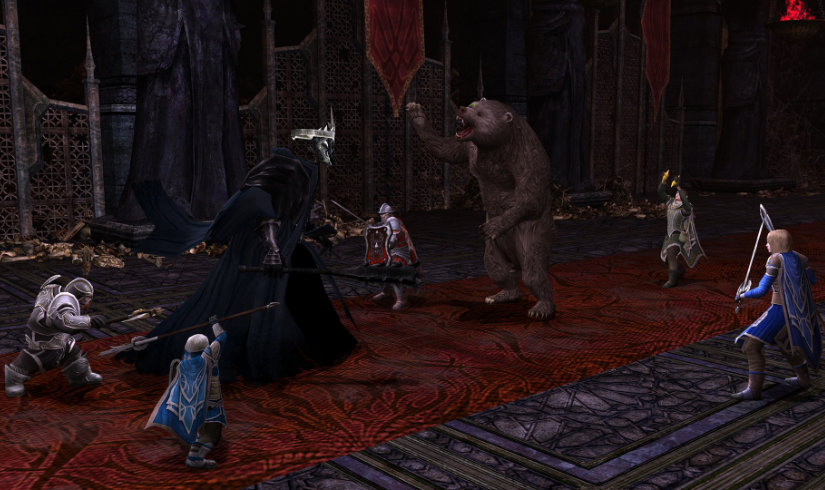
An MMORPG set in Middle-earth sounds like a no-brainer, and in 2007 it finally arrived in the form of The Lord of the Rings Online (originally subtitled Shadows of Angmar). Players customize their characters by choosing from four races (since expanded to seven, a group that includes expected choices like Hobbits and more obscure ones like the Beorning) and even more classes and professions, and they get free roam of a Third Age-era Middle-earth divided into what now spans five different lands. While those characters all fall on the side of the Fellowship, a unique PvMP (Player v. Monster Player) mode does allow players the opportunity to act as a Sauron-following monster and battle against other players.
Critics loved the game when it first launched, and it has continued to be mentioned positively in the years since it launched. More importantly: It still has a large an active community. Some sources estimate its current active user base at over 3 million, and LOTRO even managed to near its all-time concurrent traffic peak in 2022—a full 15 years after its original release.
Though ownership of the game changed hands over the years—it's now published by Daybreak Game Company—LOTR Online has remained both online and in continuous development (also under multiple companies, beginning with Turbine) since its 2007 launch and its 2010 shift to a free-to-play model. That ongoing development has translated into numerous updates and quite a few paid expansions. Some of those received a very positive reception from critics, though many did not receive enough reviews to calculate a Metascore. Here's a list:
Mines of Moria (2008)
Siege of Mirkwood (2009)
Rise of Isengard (2011)
Riders of Rohan (2012)
Helm's Deep (2013)
Mordor (2017)
Minas Morgul (2019)
War of Three Peaks (2020)
Fate of Gundabad (2021)
Before the Shadow (2022)
Corsairs of Umbar (due in late 2023)
LOTRO will have a rival in the near(-ish) future: Amazon Games is currently developing an all-new (and still untitled) MMORPG set in Middle-earth. And it will be based on Tolkien's books and not, as you might expect, the recent Amazon series The Rings of Power.
“It's absolutely no exaggeration to say that this is far and away the best game for anyone who hasn't played an MMOG before to cut their teeth on. Even more than the familiar universe, the excellent interface and gameplay design Turbine have crafted turn this into an experience which those who have previously avoided the lure of MMOs will find tough to resist.” —Eurogamer
| Buy on |

|