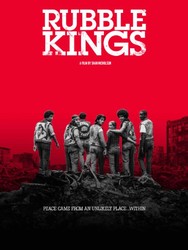







Summary:From 1968 to 1975, gangs ruled New York City. Beyond the idealistic hopes of the civil rights movement lay a unfocused rage. Neither law enforcement nor social agency could end the escalating bloodshed. Peace came only through the most unlikely and courageous of events that would change the world for generations to come by giving birth toFrom 1968 to 1975, gangs ruled New York City. Beyond the idealistic hopes of the civil rights movement lay a unfocused rage. Neither law enforcement nor social agency could end the escalating bloodshed. Peace came only through the most unlikely and courageous of events that would change the world for generations to come by giving birth to hip-hop culture. Rubble Kings chronicles life during this era of gang rule, tells the story of how a few extraordinary, forgotten people did the impossible, and how their actions impacted New York City and the world over.…Expand
Rubble Kings is a fascinating look into the gang culture that swept through the deprived areas of New York in the early to the mid 1970s. Providing insight from gang members who lived through the period, it explains the rise, and subsequent demise of the hordes of young men (and women) whoRubble Kings is a fascinating look into the gang culture that swept through the deprived areas of New York in the early to the mid 1970s. Providing insight from gang members who lived through the period, it explains the rise, and subsequent demise of the hordes of young men (and women) who fought for their very survival on a daily basis.
The feeling of stress, despair, social injustice, deprivation, and ultimately the unity of these people is incredibly palpable, as we come to understand the nature of rival gangs 'colours' and their 'turf'. Central to this are interviews with the two 'top' men in the Ghetto Brothers gang, 'Yellow' Benji, and 'Karate' Charlie, who were instrumental in bringing an end to the seemingly unceasing violence.
The death of the Ghetto Brother's 'Peacemaker'... 'Black' Benji, who was killed trying to defuse a gang war which could have escalated, enraged every other gang, to the point where it could have lead to the biggest outbreak of street level violence ever, with up to 50,000 fighting.
Instead Benji and Charlie brought the leaders of 40 of the biggest gangs together, leading to a truce. A truce that then fed into the non-violent battles such as dance competitions, MC's rap battles, and DJ's mix/scratch wars which ultimately lead to the birth of Hip-Hop and Rap.
What stops this becoming a truly legendary documentary (although it has already garnered a growing 'cult' following) is that it doesn't offer insight into the other 'side' of the story, in terms of the socio-political and economic influences that created the problem in the first place. And then continues to fuel the gang culture and rivalries. There is a very brief interview with the then Mayor of New York, and some allusions to the economic deterioration of places like the Bronx, but there's nothing about Policing or any attempts made by the political system to do something.
Also there is scant mention of drugs, something that tore the poorest Boroughs to pieces in the 70's, just a few minor throwaway lines spoken by (and about) reformed addicts, but only to highlight what the Ghetto Brothers were attempting to do to 'clean up' their own neighbourhood, rather than suggesting it was the major problem that existed at the time.
So, overall..... If you want to understand the 'culture' of New York gangs in the 70's, this is the place to go. Excellent interviews, absolutely amazing soundtrack, tight editing and direction....
However, if you're looking for a balanced retrospective on WHY everything went down as it did, then you're probably better off researching the time/place in the books which are available.
But then again, it's only just over an hour long, so taking the time to watch won't kill you.... Unless you're wearing your colours in the wrong cinema!…Expand