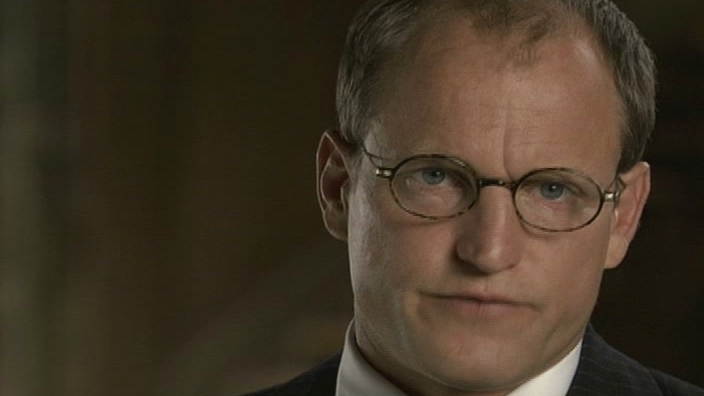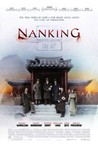







Summary:Nanking is a powerful reminder of the heartbreaking toll that war takes on the innocent, and a testament to the courage and conviction of a few individuals determined to act in the face of evil. The film tells the story of the Japanese invasion of Nanking, China in the early days of World War II and focuses on the efforts of a small groupNanking is a powerful reminder of the heartbreaking toll that war takes on the innocent, and a testament to the courage and conviction of a few individuals determined to act in the face of evil. The film tells the story of the Japanese invasion of Nanking, China in the early days of World War II and focuses on the efforts of a small group of unarmed Westerners who established a safety zone where over 200,000 Chinese found refuge. The events of the film are told through deeply moving interviews with Chinese survivors, archival footage, and the chilling testimonies of Japanese soldiers, interwoven with staged readings of the Westerners' letters and diaries as performed by Woody Harrelson, Mariel Hemingway, Jurgen Prochnow, and Stephen Dorff, among others. (THINKFilm)…Expand
Saw this deeply moving and difficult documentary on Christmas Eve. And a movie depicting the slaughter of several hundred thousand Chinese by invading Japanese seems hardly the move to see on Christmas Eve. But the courage and clear moral choices made by 20 westerners to do what they could Saw this deeply moving and difficult documentary on Christmas Eve. And a movie depicting the slaughter of several hundred thousand Chinese by invading Japanese seems hardly the move to see on Christmas Eve. But the courage and clear moral choices made by 20 westerners to do what they could to save the lives of innocent victims of war, rape and oppression answered for me better than anything else I've seen this holiday season the question "What would Jesus do?" He'd have stayed behind, as every other western national fled, to take a moral stand against brutality and war. Hard to watch but a reminder about how people can make a profoundly moral decision to stand up, and back against, the force of evil. I highly recommend this film.…Expand
0 of 0 users found this helpful
8
ChadS.
May 1, 2008
In Atom Egoyan's "Ararat", the Canadian filmmaker depicted the Armenian massacre at the hands of Muslim Turks, as a film within a film, a reenactment in front of a Armenian director's rolling cameras. To show the true face of genocide without some sort of distnaciation is In Atom Egoyan's "Ararat", the Canadian filmmaker depicted the Armenian massacre at the hands of Muslim Turks, as a film within a film, a reenactment in front of a Armenian director's rolling cameras. To show the true face of genocide without some sort of distnaciation is unfilmable. "Nanking" knows this. That's why "Nanking", narratively, bears a striking resemblance to Mario Van Peebles' "Badassssss!"". And like Louis Malle's "Vanya on 42nd Street", the filmmaker shows the actors' arrival at the set before they settle into their respective characters. And sure enough, "Nanking" can't help but feel like theater(or more to the point, performance art), when recognizable actors such as Woody Harrelson and Mariel Hemingway deliver dramatic readings of their real life counterparts, alongside newsreel footage of war atrocities, and the testimonies of actual witnessess to said war atrocities. They're a necessary evil. So deal with it. Without names, however, "Nanking" wouldn't get the funding, or make the art-house circuit, or receive a proper DVD release. But because the story of Japanese occupation in China's capitol is such a horrific account to stomach, the actors do eventually disappear into character. Ultimately, what matters is that the story gets out to the uninitiated. Knowing what you now know about the Japanese during wartime, you'll never look at their national cinema in the same way. Especially the films of Yasujiro Ozu. Now that you know, they'll look like propaganda films.…Expand
0 of 0 users found this helpful
5
JanschieD
Aug 7, 2009
This documentary is well made. However, another exactly similar documentary was already made and shown sometime ago concerning Japanes "war crimes". (There were many). Somehow, this film doesn't have any of the impact of the former - nor does it carry the impact or inspiration of its This documentary is well made. However, another exactly similar documentary was already made and shown sometime ago concerning Japanes "war crimes". (There were many). Somehow, this film doesn't have any of the impact of the former - nor does it carry the impact or inspiration of its precursor book, The Rape of Nanking by Iris Chang. It hardly explains the why's of the atrocity. It does a good job of presenting the chronology of the events- and most of these are done so in a very moving way. The narrating actors are generally good to superflous - but, on the whole, they really add nothing to the story. The interviews with Chinese victims are very poignant - the ones with Japanese soldiers are repugnant - not one of these old men demonstrate a drop of remorse - and this is manipulation. Other records show that there was and is a great amount of rethinking on the part of these common soldier perpetrators. Lawrence Rees's recent book on the World War 2 Japanese armies is a good starting point. In summary, a satisfactory attempt about a difficult and relatively unknown terrible crime among many that has gone mostly unpunished. Chang's book "The Rape of Nanking" is a much better introduction to this compelling subject.…Expand