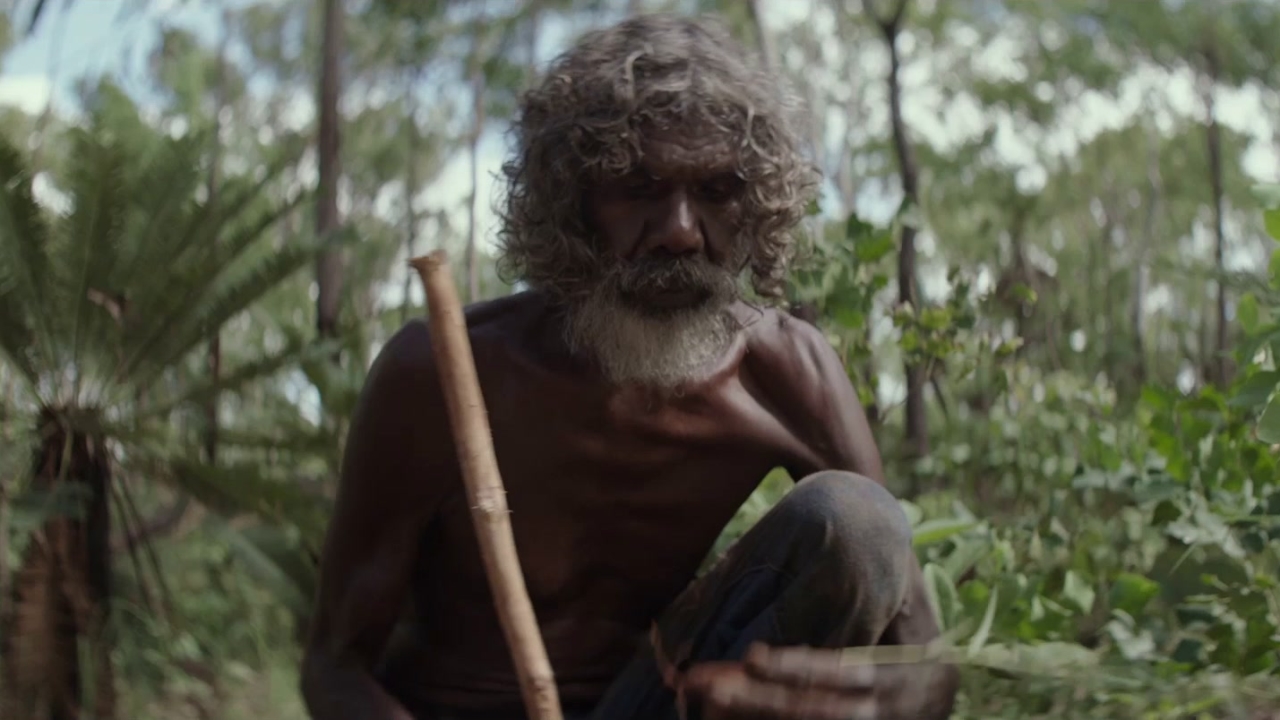
Summary:Living in a remote Aboriginal community in the northern part of Australia, Charlie is a warrior past his prime. As the government increases its stranglehold over the community's traditional way of life, Charlie becomes lost between two cultures. His new modern life offers him a way to survive but, ultimately, it is one he has no power over.Living in a remote Aboriginal community in the northern part of Australia, Charlie is a warrior past his prime. As the government increases its stranglehold over the community's traditional way of life, Charlie becomes lost between two cultures. His new modern life offers him a way to survive but, ultimately, it is one he has no power over. Finally fed up when his gun, his newly crafted spear and his best friend's jeep are confiscated, Charlie heads into the wild on his own, to live the old way. However Charlie hasn't reckoned on where he might end up, nor on how much life has changed since the old days. [Monument Releasing]…Expand
After surprising Venice with The Tracker in 2002, and winning the Cannes Special Jury Prize with the universally acclaimed Ten Canoes in 2006, Rolf de Heer adds yet another stunning title to his filmography about Aboriginal Australian culture. Charlie’s Country is mainly a celebration of deAfter surprising Venice with The Tracker in 2002, and winning the Cannes Special Jury Prize with the universally acclaimed Ten Canoes in 2006, Rolf de Heer adds yet another stunning title to his filmography about Aboriginal Australian culture. Charlie’s Country is mainly a celebration of de Heer’s long time friend and Aboriginal icon David Gulpilil, who also won the Best Actor prize in Cannes for his interpretation. Since Walkabout (1971), Gulpilil has never stopped surprising with his strong performances, naturalism and authenticity; his charisma and a life of great highs and miserable lows made him the symbol of a generation, and brought Aboriginality into the mainstream of the screen arts.
Charlie’s Country tells the story of an Aboriginal man, Charlie (Gulpilil), who lives in a community in the Northern Territories of Australia. His constant fight against the white society’s prejudice and neglect fuels his desire to go back to the swamp where he was born, and live in the old way. De Heer has no remorse in exposing the government’s ignorant and preposterous approach to this social issue, and deals with Charlie’s personal conflict in a very sympathetic yet objective way. Charlie’s Country is an insight on Charlie’s problems with alcoholism, his inadaptability to modern society, and the unsolvable struggle between surviving in the artificial security of government controlled communities, and enjoying freedom in the wild and unforgiving Australian forest.…Expand