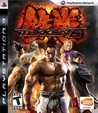
For those who have ADD, this summary will sort you out (for those without, read everything): 1) Tekken 6 is the best the series has ever been since tag. The gameplay is intense, deep, and fun, all at the same time. 2) Scenario Campaign is useless, boring, and an absolute waste of space. 3) The missing training mode means that a lot of game journalists will not be able to appreciate the For those who have ADD, this summary will sort you out (for those without, read everything): 1) Tekken 6 is the best the series has ever been since tag. The gameplay is intense, deep, and fun, all at the same time. 2) Scenario Campaign is useless, boring, and an absolute waste of space. 3) The missing training mode means that a lot of game journalists will not be able to appreciate the depth of the game play. 4) The code for online is a separate DLC, so there IS hope for future improvements and support. 5) The ending cinematics feel like they were compromised for the Xbox version in order to make room scenario campaign. 6) The graphics feel compromised for the same reason as above. --- What is scenario campaign mode? Namco's stubborn insistence that we play a terrible, clunky, and bland side-scroller. What's bad is that this is the only way to unlock all the characters' endings. I can't underline enough how much I dislike the amount of development time Namco spent on this - I mean, all of that time could have been spent on a proper training/tutorial mode, some SF4-style character-specific challenges, and a host of other features, such as custom profile export/import so that you can play your custom character at a friend's house (currently this is not possible.) I honestly feel that scenario campaign is the sole reason why the game's graphics are not arcade perfect. In order to fit the entire game into a DVD, it was obvious Namco was going to make sacrifices - it certainly shows in the quality of the CG endings (they're sharper in the PS3 version), but as the arcade version of T6 is a PS3-in-a-box, there is no excuse for the console versions to have downgraded graphics. Everyone knows that: lower res graphics = less file space required. I wonder where that file space went? *accusingly points at campaign scenario mode* My other gripe is the lack of a proper tutorial/training mode for beginners. Tekken has been around since the early 90's, and until today, some people STILL mistake it as a button masher, and that mastering 10-hit combos (also known as 10-strings) are essential to becoming a Tekken master. (Not that I'm surprised, Namco even saw it fit to mention 10-strings in the game's manual. Of course, none of the above are true at all. In fact, Tekken is one of the most technically demanding fighting games - right up there with Virtua Fighter, and, some may argue, more so than Street Fighter. However, thanks to Namco's focus on a side game, rather than focusing on the actual strength of T6, it's gameplay, this misconception isn't going to change anytime soon. --- The Fighting System. Before we begin, you'll need to know the notations: LP (left punch) = 1 RP (right punch) = 2 LK (left kick) = 3 RK (right kick) = 4 f = forward ff= tap forward twice b = back db = down and back (you press the two directions at the same time) d,f = down, then forward - you tap them separately, not press the together u = up... (you get the picture) Right, let's get on with it... The Fighting System: If you haven't been keeping up with Tekken, there are a number of changes and improvements that have been made. Some of these include: The fastest moves in the game are 10 frames. No more 8 frame jabs, etc. Hitboxes have been tightened, which means that a lot of moves have picked up evasive properties (e.g. a kick with a low ducking animation can "slip through" mid hitting moves if timed right.) This also means that sidesteps/sidewalking has been refined significantly. Juggle damage has been reduced. While it is not uncommon to find large damage juggles in 3D fighters (Virtua Fighter has 50-70% juggles), players wanted the damage reduced in Tekken, and so T6 is a reflection of that. A new feature, called bound, or B! for short, has been added. Tekken's wall game has been tweaked. A lot of it revolves around wall splats, or W! for short. Low parry is now universal, but unlike DR, where a low parry placed your opponent in a crouching state, a low parry in T6 puts them into bound. New "tracking" moves have been added The "nerfing" of back dashing. The inclusion of item moves. The inclusion of rage.Dynamic Stages - wall breaks and floor breaks What is Bound? Overall, Bound moves are essentially combos extenders, but when/why/which to do depends on the situation. A Kazuya combo in the past would something like EWGF (f~df+2), EWGF, EWGF. In T6, you can now do EWGF, EWGF, db+2 (Kazuya's elbow, which causes bound) B!, EWGF, dashing EWGF. However, because characters have several moves that bound, and each of these moves have their own recovery animation, some moves which work post-B! will not work when the bounding move is different. To explain: Lars has a bound move which is done by f,b+2,1 - and afterwards, f+3,1~hold f,then 1, is guaranteed. Lars also has a bound move which is done by WS+2,1 (while standing from crouch, 2,1) - but the above post-B! combo does not connect because of the bound move's recovery animation. So yeah, you do need to know what options you have. Also, some bound moves can catch tech rollers (a way to get up after a knockdown), and places them in bound. This benefits (and balances) characters that don't really have crazy good okizeme, like King (his db+2 elbow hammer will hit a backroller, bound, and then he can do a spinning powerbomb air throw). Yes, you can do air throws post-B! Juggles, Walls, and Bound Primer: (these are default properties) Default: Bound can't be done twice in a combo. "Double" bound only happens if you manage a stage floor break AFTER you've done a bound move. Default: Wall splat can only be done once on a wall. However, if you're able to re-carry the opponent to another wall, it's possible to get another (side) wall splat. Is it possible to do 3 wall splats in one combo via 3 different walls? Maybe, but I AFAIK, nobody knows yet, and the stages aren't exactly setup to allow for that to happen (although somebody might just be able to pull it off on a combo vid). Default: After a wall splat, the rule of thumb is that you're given a window that allows for 3 more hits, depending on the speed. Speed-wise, think Paul's d+4:2:1+2 (All 3 hits will connect). Rapid-hitting mid attacks (such as Steve's hundred punches) will net you more hits however, but not all characters have those moves. Likewise, you won't have the time to connect 3 slow but powerful attacks post-wall splat. Maybe 2 at most. Default: Air-throws in combos do not scale. Which explains why King can be extremely dangerous: e.g. A combo that ends with any of King's air throws, regardless of the length, will not scale down King's air throw damage. Why are Tekken's juggles a core part of the game, especially with damage reduced: In T6, you'll be lucky to get 50% without any wall or a CH (hitting on counter). They've nerfed damage considerably, so nailing a CH hit (non-juggle/non-launcher) can net you significant damage. Bryan's mach breaker (ff+2) on CH can net you around the equivalent of a post-low parry combo. It's not just that stand alone moves got beefed - due to the bigger life bars, combo damage has been reduced, which leads to the question: You ask yourself: do I try to take them to the wall for some extra wall damage, and corner pressure? Or do I drop them in front for a chance to apply oki (short for okizeme) which "resets" the juggle (thus leading to another B!). I might have decided to go for a reset, and the opponent successfully defends, then I lose the small extra guaranteed damage I may have gotten if I chose to take him to the wall instead. The other benefit to "taking them to the wall" is the opportunity for a move which gives you a W! (wall splat). Your wall options are major reasons why you need to know each stage very well. Knowing which of your moves can net you a high wall splat from halfway across the stage could spell the difference of the match. In a non-walled stage, you lose the choice of being able to take the opponent to the wall, but you're given slightly more spacing options. Stage Breaks: Floor Breaks - as noted above, floor break = bound. However, since your character is also recovering from the fall, your post-B! window is actually rather small. Wall Breaks - touching briefly on wall splats above, a wall break essentially means that you net a wall splat, where on default you should only have 3 free hits, a wall break leaves your opponent stunned in mid-air, meaning that you can continue "floating" (not launching, as they are already considered airborne) your opponent for more than 3 hits. However, a wall break or wall splat does not reset the combo, so no, you can't re-bound them after a wall break. Item moves: Item moves are taunts. Nothing more. Think SF3 Shaun's basketball taunt. They're slow as hell, do very little damage, and are easily avoided. Although they are good for a laugh if you think you can catch your opponent sleeping (e.g. they're on their last bit of life, and are running away thinking there's nothing you can do to catch them, and then you slowly pull out your gun, and shoot.) I've won twice this way, and the looks on their faces are priceless. Tracking moves: With the improvement of Tekken's sidestep and sidewalk game, Namco also saw fit to introduce tracking moves. If you've seen some recent videos on YouTube, you may notice a few moves that have a white "streak" or tail. These moves "track" your opponent in such a way that if they sidestep in the direction the move tracks, they will get hit. Some moves can track both left and right, but aren't game breaking in the least (annoying maybe, but not broken). Rage: Not unlike SF4's ultras - rage kicks in when a player is down to his last 5-10% of life, and acts as a comeback tool as it ups the raged player's damage by +30%. This also helps keep the winning player on his toes, making the matches very exciting. Most (all?) top Tekken players no longer complain about rage because when a player is down to his last bits of health, it doesn't take more than a sweep or launcher + one or two free hits to finish them. Backdashing and Backdash Cancelling: Backdashing is a technique that exists in a lot of fighting games, but only Tekken has backdash cancelling. To explain: Q: What is backdash canceling used for? A: You can use it to space away from your opponent, creating more room. You can also use it to force more whiffs. The fact that you cancel one backdash to another makes it a much quicker movement option. Q: How is it done? A: back, back, down/back, back, down/back, back.... Essentially, the only full backdash that you have to do is the first one. Afterwards, the down/back input counts as the first input of your next backdash, allowing you to do it much faster. Q: I'm getting caught while I backdash (getting hit). What am I doing wrong? A: You could be doing one of two things wrong: 1) You spent way too much time during the down/back, back input, forcing your character to go into a small crouch (coincidentally, this crouch WILL block lows but will let mids hit you). 2) You're doing the d/b, b input really well, but you let go of the stick too early. Even when you just do ONE backdash, if you hold back during the entire duration of the backdash, it will still block. If you ever let it go, it will no longer be blocking. This applies to the initial backwards movement animation. So make sure that your transition from b, letting go of the stick, d/b, b is completely flawless. Q: Why can't I do backdashes well with Paul, Nina and Bryan? A: Their sways make it extremely hard to BDC consistently. What you can do in this occasion is "stair step" (coined by Neorussel), which just involves backdashing, doing a short sidestep, and backdashing again. Q: When should I BDC? A: Whenever you feel the other guy is too close to you. Whenever you want to create space. Actually, you can pretty much BDC all the time and you'll avoid a lot of mixups. Q: Which characters have the better backdashes in the game? A: The only one which I can confirm about having the best backdash in the game is Marduk. The rest that I am about to mention are just me assuming: Eddy, Law, Jack, Julia. Lei has ha-ha step but it's much more hard to do, although it IS by far the fastest backward movement. Source: TekkenZaibatsu.Com So how was it nerfed? In the past, BDC allowed characters with strong punishers (Mishima's notably) to rule the game, as it allowed them to space effectively, and punish with powerful moves. In T6, BDC has been lessened, meaning Mishima's, who already have powerful punishing tools, have been balanced out considerably, as they can no longer create the space they used to. This means that characters with less powerful punishment tools, but have "stance-based back dash cancels", such as Lei, can now space effectively. Yes, T6 is incredibly balanced. The popular opinion amongst the top players is that T6 is the most balanced Tekken has ever been. Which is amazing, considering that are 37+ unique characters. As you can see, the basic changes alone in T6 are quite extensive. This doesn't even cover the per-character changes (and they too, are extensive). However, to repeat myself: all of this goes unnoticed unless you are actually part of Tekken's hardcore community, which is a shame, because a lot of people do not have the time to be part of a community, but could appreciate this game far more, if only Namco had replaced scenario campaign with a tutorial/training mode instead. I would have given this game a 10/10 if it was based on the game play alone, but even as a hardcore Tekken player, I can't ignore the fact that scenario campaign was an unnecessary waste of time (-0.5), and the fact that Namco once again does not help towards making the best aspects of the game accessible to beginners (-0.5). In conclusion: This game is worth buying if you love fighting games. The game play is simply superb. However, the way Namco packaged and presented it is nothing short of a embarrassment.… Expand